Last Updated: November 16, 2026
Quick Summary
Neck pain relief for seniors starts with gentle, supported exercise done most days, since exercise therapy is considered an evidence-based approach for chronic neck pain. Add heat or ice, posture checks, and a pillow that keeps your head in line with your spine. Seek same-day care after a fall or if you have numbness, weakness, or loss of bladder control.
- Do the five-step stretch routine seated in a firm chair or standing with one hand on a counter.
- Ice for the first 48 hours after a strain, then switch to heat for 15 to 20 minutes.
- Set a timer to stand and reset your posture every 30 minutes.
- Replace a sagging mattress after 7 to 10 years.
- Ask whether a practice accepts Medicare and what your first-visit copay will be.
Table of Contents
- Why Neck Pain Hits Older Adults Harder
- Gentle Neck Exercises for Seniors
- Neck Pain Home Remedies for Seniors
- Neck Pain From Sleeping Wrong: Fixing Your Setup
- When to Seek Care for Severe Neck Pain
- Treatment Options and Medication Safety for Older Adults
- Finding Neck Pain Relief in Las Vegas
- Requesting an Appointment at Campbell Chiropractic Wellness
- Frequently Asked Questions
Why Neck Pain Hits Older Adults Harder
Neck pain relief for seniors starts with understanding why the neck changes with age. The cervical spine, the seven-bone section that supports your head, wears down over decades, showing up as stiffness, aching, and limited motion.
This guide explains what helps and what to avoid.
The scale of the problem is large. A 2025 review of global neck-pain data tracked prevalence and disability from 1990 to 2021 and projected the burden forward, reporting that neck pain remains a major cause of years lived with disability worldwide (global neck pain burden study).
Older adults feel this more than younger people because the structures that protect the neck have had more time to change.
Age-Related Changes in the Cervical Spine
Three changes explain most senior neck pain.
- Degenerative disc disease. The discs between vertebrae lose water and height, so they cushion less.
- Arthritis. The joints in the neck can develop osteoarthritis, which causes stiffness and aching.
- Spinal stenosis. The spinal canal can narrow and press on nerves, which may send pain into the arms.
These are normal age-related changes, not a sign that something is wrong with you. Many people with these changes feel little pain; others feel a lot. The difference often comes down to muscle strength, posture, and daily habits.
Gentle Neck Exercises for Seniors
Gentle neck exercises for seniors are one of the better-supported ways to manage chronic neck pain. A 2023 review concluded that exercise therapy is considered an evidence-based approach for managing chronic neck pain (exercise therapy for chronic neck pain).
That does not mean hard workouts. It means slow, controlled movement done most days, adapted to your balance, mobility, and fall risk.
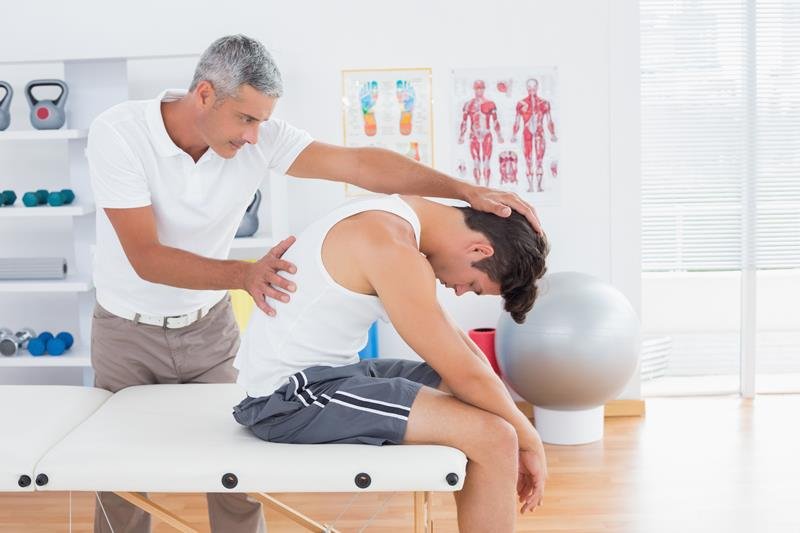
A Safe Daily Stretch Routine
Try this five-step routine once or twice a day. Do it seated in a firm chair with armrests, or standing with one hand on a counter, so you have support if you feel unsteady.
- Chin tuck. Sit tall. Slide your chin straight back, like making a double chin. Hold 5 seconds. Repeat 10 times.
- Slow head turn. Turn your head right until you feel a gentle stretch. Hold 5 seconds. Switch sides. Do 5 each way.
- Side tilt. Tip your ear toward your shoulder without lifting the shoulder. Hold 5 seconds. Do 5 each side.
- Shoulder rolls. Roll your shoulders back in slow circles. Do 10.
- Shoulder blade squeeze. Pull your shoulder blades together and down. Hold 5 seconds. Repeat 10 times.
Watch out: Skip any stretch that makes your arms tingle or go numb. That can be a sign of nerve compression, and it needs a professional opinion.
Adapting the Routine for Balance and Fall Risk
Falls are the leading cause of injury-related death among adults 65 and older in the United States, according to the Centers for Disease Control and Prevention, and neck pain can make the problem worse because people guard the neck and turn the whole body instead of the head. A few modifications keep the routine safe:
- Stay seated if you feel unsteady. All five movements can be done in a chair; standing versions are optional.
- Use a counter or wall for support. If you stand, keep one hand on a stable surface and wear supportive, non-slip shoes.
- Move the eyes before the head. Look in the direction you plan to turn, then follow slowly with the head. This reduces dizziness.
Seniors often stop exercising entirely after one bad experience. The better approach is to reduce the range, add support, and continue daily. Consistency matters more than intensity.
How Often and How Hard
Start with one round once a day for the first week. If pain does not increase, add a second round. Mild soreness that settles within a day is normal; sharp pain, arm tingling, or a building headache is not.
If you already follow a movement routine, our guide to lower back pain exercises to avoid covers which movements to skip so you do not aggravate your neck or back.
Neck Pain Home Remedies for Seniors
Neck pain home remedies for seniors work best when they target inflammation and muscle tension together. Heat, cold, and rest all have a place, but timing matters.
- Ice packs for the first 48 hours after a strain. Use for 15 minutes at a time, wrapped in a towel.
- Heat therapy after the first two days. A warm shower or heating pad for 15 to 20 minutes relaxes tight muscles.
- Over-the-counter medication. Acetaminophen or NSAIDs can ease pain, but check with your doctor or pharmacist first, especially if you take blood thinners or blood pressure medicine.
A 2025 clinical practice guideline notes that analgesic drugs may offer only short-term relief with a low effect size for chronic neck pain (clinical practice guideline on nonspecific neck pain). In plain terms: pills can take the edge off, but they are not a fix.
Neck Pain From Sleeping Wrong: Fixing Your Setup
Neck pain from sleeping wrong usually comes from a pillow that pushes the head too high or too flat. The goal is to keep your head in line with your spine.
| Setup Problem | What It Causes | Fix |
|---|---|---|
| Pillow too thick | Head tilted forward all night | Use a thinner pillow or a contour pillow |
| Pillow too flat | Head drops back, straining muscles | Add a folded towel under the pillow |
| Sleeping on your stomach | Neck twisted for hours | Train yourself to sleep on your back or side |
| Old, sagging mattress | Poor spinal support | Replace after 7 to 10 years |
Side sleepers need a pillow that fills the gap between the shoulder and the head. Back sleepers do better with a thinner pillow and a small roll under the neck.
When to Seek Care for Severe Neck Pain
Seek care the same day if neck pain follows a fall, a car crash, or comes with weakness, numbness, or loss of bladder control. Those are red flags for a serious condition, not a muscle strain.
Some symptoms need a doctor now, not a wait-and-see approach.
Red Flags That Need Same-Day Attention
- Pain after a fall or impact
- Numbness or weakness in the arms or hands
- Trouble walking or keeping your balance
If you check any box on that list, call your doctor or go to urgent care. Do not wait for a routine appointment.
For seniors who want a practice that understands older bodies, our pediatric and senior care page explains how care is adjusted for different ages.
Treatment Options and Medication Safety for Older Adults
Treatment for senior neck pain often starts with nonsurgical options, and the right choice depends on your other health conditions as well as your neck. A physical therapist can teach strengthening and range-of-motion work. A 2025 clinical practice guideline notes that analgesic drugs may offer only short-term relief with a low effect size for chronic neck pain (clinical practice guideline on nonspecific neck pain).
A Senior-Focused Comparison of Treatment Options
Most guides describe each treatment separately. For older adults, the more useful question is how the options compare on likely benefit, limitations, and risk.
- Physical therapy and guided exercise. Limitation: requires consistent effort and access to a therapist or safe home routine. Risk: the main risk is doing too much too soon, so adapting the routine for balance and mobility matters.
- Manual therapy and massage. Limitation: effects may be temporary and often work best combined with exercise. Risk: discuss with a qualified provider, since forceful manipulation may not be appropriate for people with osteoporosis, spinal stenosis, or a history of fracture.
- Over-the-counter medication. Benefit: quick, short-term relief. Limitation: does not address the underlying cause. Risk: higher in older adults, see the safety notes below.
Medication Safety for Older Adults
Medication safety deserves its own section for older adults, because the same drug that is low-risk in a 40-year-old can be higher-risk in a 75-year-old.
- NSAIDs (ibuprofen, naproxen) can raise the risk of stomach bleeding and kidney problems, and the risk grows with age. They can also interact with blood pressure medicine and blood thinners.
- Acetaminophen is often safer for older adults but still needs a dose check. The label limit is easy to exceed when you combine a pain product with a cold or sleep product that also contains acetaminophen.
- Never combine two products with the same ingredient. Read the active-ingredient panel on every box.
If hands-on care interests you, read our article on whether manual therapy for neck tension actually helps before you book. And if forceful adjustments worry you, our gentle spinal manipulation page shows what a lighter approach looks like.
Cost and Coverage Questions to Ask
Cost and insurance vary by practice and plan, and Medicare coverage depends on the service and the plan. Before you book, ask whether the practice accepts Medicare, whether physical therapy requires a referral, and what your copay will be for a first visit. A short phone call can help avoid billing surprises.
Finding Neck Pain Relief in Las Vegas
Finding neck pain relief in Las Vegas means finding care that fits your schedule, your insurance, and your body.
A few practical tips for local readers:
- Ask any clinic whether they treat Medicare patients before you book.
- Check whether imaging or X-rays are done on site.
- Ask what a first visit includes and how long it takes.
Cost and insurance vary by practice and plan. Call ahead and ask what your plan covers, including any copay, so there are no surprises.
At Campbell Chiropractic Wellness, we offer chiropractic care, spinal decompression therapy, and specialized therapies such as cold laser therapy and hyperbaric oxygen therapy, with care available for patients of all ages.
Requesting an Appointment at Campbell Chiropractic Wellness
Neck pain in your 60s, 70s, and beyond is common, but it is not something you have to live with.
We start with a full history and a physical exam, then build a plan around your goals, easing stiffness, improving range of motion, or getting back to daily activity.
If you are ready to take the next step, you can request an appointment online and choose a time that works for you.
Neck pain that limits your days does not have to be your normal.
Frequently Asked Questions
What helps neck pain in the elderly?
For most older adults, a mix of gentle movement, heat therapy, and posture adjustments helps more than rest alone. A 2023 review indexed in PubMed Central found exercise therapy is the best evidence-based approach for chronic neck pain, and a 2025 clinical practice guideline supports exercise therapy for chronic neck pain. Start with slow range-of-motion exercises, apply moist heat for 15 to 20 minutes, and check your pillow height. If pain persists beyond a few weeks or comes with numbness or weakness, get a medical evaluation.
Are neck stretches safe for seniors with arthritis?
Gentle stretches are usually safe for seniors with arthritis when done slowly and within a comfortable range. The key is avoiding forced or bouncing movements and stopping at the first sign of sharp pain. A physical therapist can tailor a routine to your specific cervical spine changes. Anyone with severe arthritis, spinal stenosis, or a recent injury should get clearance from a doctor before starting a new stretching program.
How can seniors relieve neck pain from sleeping wrong?
Start with a pillow that keeps your head and neck in line with your spine. Ask a pharmacist or doctor which over-the-counter pain relievers are appropriate for you before using them. Gentle range-of-motion exercises can help ease stiffness. If a stiff neck lasts more than a week or comes with a headache, fever, or arm tingling, see a doctor for an evaluation.
When should an older adult see a doctor for neck pain?
See a doctor promptly if neck pain follows a fall or injury, radiates down an arm with numbness or weakness, or comes with fever, unexplained weight loss, or loss of bladder control. These are red flags for nerve compression or a more serious condition. Also seek care if pain lasts more than two to three weeks despite home remedies. A medical evaluation can rule out fractures, spinal stenosis, or infection and guide you toward physical therapy or other nonsurgical treatment.

